Monday, February 29, 2016

Reading with a Purpose

To be an efficient reader, you should read with a PURPOSE

This means that you should determine WHY you're reading the text, and what you'll be asked to do with the information in that text.
For example:

  • will have a quiz on vocabulary the next day?
  • will you be assessed on your understanding of "big ideas" in the text?
  • will you discuss what you read in class the next day?
  • will you be asked to write a paper on the topic?
  • will you need general background knowledge on this topic, as a jumping-off point for further study?
  • will you later need to answer questions about the reading?
  • will you need to match the people mentioned in the text, to certain dates or events?


By first determining your purpose, you'll then be able to decide what you should be paying the most attention to while reading.
For example:

  • if you know you will be assessed on how well you know the vocabulary in the text, you would pay closest attention to that vocabulary (which may be bolded or highlighted in some texts). 
  • if you know you'll have to discuss the text in class the next day, you would benefit from thinking about major questions the text brings up, or how you'd summarize what you read.
  • if you know you'll have to answer questions about the text, you could preview those questions so that you're looking for the answers while reading. 


Once you have an idea of your purpose for reading, you can adapt your reading strategy to fit that purpose. For additional pre- and during-reading strategies and tips, check out some of the other posts on this blog, like this onethis one, or this one.


Wednesday, January 13, 2016

Graphic Novels as a Tool for Accessing Content

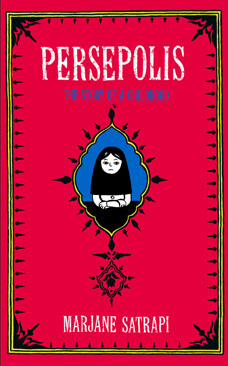
Last night, I finished reading a graphic novel called Persepolis, by Marjane Satrapi. It is about a young girl growing up in Iran in the 1970s and 1980s. While I had previously attempted to learn more about that region's conflicts and underlying causes of them, I feel like I never really had a firm grasp of how the recent history of the country impacted its role in the world today.

The format of this book, however, really helped me to see not only the personal impact of the revolutions and war during that time on one family, but also to understand some of the broader political and religious situations that contributed to this time of upheaval. While it looks like a comic book, with its black and white drawings with speech and thought bubbles, and is broken into vignettes that could be read piecemeal, altogether the book really
helped me to better understand the historical context of what has happened in the Middle East in the last few decades.


There are a variety of graphic novels and graphic representations of different historical periods, that may help you or your student to build some background knowledge on the topic. Having background knowledge, as you know, will help you to better understand your textbook or other, more complex required reading. There are also graphic novel versions of many classic novels too, which can be a good supplement to reading the real book, an enjoyable review of major plot points, or a good previewing and jumping-off place prior to reading the whole book.

Give it a try, and you might find it both helpful and enjoyable!

Wednesday, November 18, 2015

Memory Strategy: Triple Note Tote

Memory Strategy: Triple Note Tote

A Triple Note Tote is an easy, fast, and fun way to remember vocabulary for classes like English, Social Studies, Science, and Foreign Language. Once you're done, it can also serve as a practice test, study guide, and/or reference sheet when completing work.

Materials needed:
  1. piece of paper, folded into 3 columns
  2. something to write with
  3. vocabulary you're trying to learn

To make a triple note tote, label the three columns like this:


Vocabulary word
Definition 
(in your own words)
Memory strategy or
visual trigger


In the first column, you're simply going to write down the first vocab word you need to learn. 

In the second column, you'll paraphrase the definition, or put it into your own words. Not hard, right?

So far, your sheet should look like this:

Vocabulary word
(Spanish)
Definition 
(in your own words)
Memory strategy or
visual trigger
 Mesa 
 table


Now comes the fun part, which might take a little longer but will really help you to learn and remember the words. Think about a visual trigger that associates the vocab word with its definition. For example, I might think of a very messy-looking table, because "mesa" reminds me of "mess." Then, I would draw a messy table in that third column of my paper, like this:

Vocabulary word
(Spanish)
Definition 
(in your own words)
Memory strategy or
visual trigger
 Mesa 
 table
 

The reason you should have some sort of visual trigger, or image, associating the word with its definition is that images (pictures) and language (words) are stored in different areas of the brain. If the language portion of our brain is having a hard time recalling the meaning of "mesa" or the Spanish word for "table," the picture part of our brain still has a chance to kick-in to trigger that language part of our brain. This isn't the most scientific explanation of the process, I know, but it makes sense, right?

Here are a few more examples of how you could use a triple note tote to help you remember vocabulary for a foreign language (in this case, Spanish and Latin):
Vocabulary word
(Spanish or Latin)
Definition 
(in your own words)
Memory strategy or
visual trigger
 Correr (Spanish)
to run

detail.jpg
The Terminator says "I will end you."
Terminare (Latin)                          To end, To finish                          
                                    

Wednesday, November 4, 2015

Following Directions


Many students only skim through, or skip over altogether, the directions for an assignment. 

This can obviously cause you some problems: you may do the work incorrectly and need to re-do it, you may do too much work and be wasting your time, or you may not do all of the work that is required. 

There are a few strategies, however, that you can use to make sure you're paying close attention to all parts of directions, and following them correctly. Those strategies include:

1. Reading the directions twice before starting. Then, re-read the directions when you think you're done, to make sure you followed them correctly.

2. Asking yourself, "How would I explain these directions to someone else, using my own words?" If you're not able to do that, it may mean you don't truly understand the directions. So, ask for help or try another strategy.

3. Highlighting or underlining key words in the directions.

  • Pay close attention to words like: 
    • (English/ History/ Science) Read, underline, circle, summarize, explain, provide details, write in complete sentences, brainstorm, analyze, compare, contrast, prove, describe, annotate, mark up, support...
    • (Foreign Language) Translate, summarize, explain, write in complete sentences, describe...
    • (Math) Find the product/ sum/ quotient/ remainder, simplify, show your work, diagram, demonstrate...

Sometimes, teachers will make bold, underline, or italicize the most important words in directions, so pay close attention to those signals too!

4. Highlighting, underlining, or circling signs and symbols (x, -, +, =,  ÷) in math problems. If you treat something like an addition problem when it's really a multiplication problem, you're obviously not going to get the correct answer. Color-coding signs for addition, multiplication, subtraction, and division, can be another cue to pay close attention to the signs.

5. If there is more than one step to the directions, you should identify each different step you should take. For example, in the following directions, you're being asked to do three things:
Identify three inventions of the industrial revolution, explain how each invention changed the way people lived, and summarize what life would be like today if these inventions did not exist. 

By highlighting or numbering each step, you're going to be more likely to follow each of the three sub-directions and produce a more complete answer.
Identify three inventions of the industrial revolution, explain how each invention changed the way people livedand summarize what life would be like today if these inventions did not exist. 

Try out one or more of these strategies if you often hear from teachers that you need to pay close attention to the directions, or if you see that your errors are not really reflective of what you actually understand. 

If you have other ideas or strategies for following directions, please leave a comment to share!


Friday, October 16, 2015

Quick Tips for Creating a Space that's Conducive to Studying


It's important to have an organized space where you can consistently complete your homework and studying. Having fewer distractions and knowing where to find necessary materials will help you to complete your work more quickly, and allow you to have time to do the things you want to do! Taking a few minutes to read through these simple tips might just put you on the path to a shorter and more efficient homework time!

I'm going to try to keep this post streamlined and organized, just like a study space should be...                                                                               

Workspace


  • Have a set study space and storage space
    • The storage space should ideally be in the study space, but it could also be a shelf or cabinet or bin in another room. 
    • Keep your materials and textbooks in the same place all the time, when at home. Ideally, this place should be a specific location within your study space.
  • If you split your time between two homes, or don't always have an opportunity to do your homework in the same place each day, create a "workspace bag/bin" that contains everything you'll need for a mobile workspace. 
    • The bag or bin will keep everything together, and is easily portable. 
    • Only take things out of the bag or bin when you're using them in that moment. Then, put the item back right away so you'll know where to find it when you need it next.
    • This is not so good...
    • Keep this workspace bag/bin in one place (e.g. trunk of a car).
  • Reduce clutter in your work area. 
    • You should work on a clear, uncluttered surface. 
    • After unpacking your bag, put one subject's materials on the surface at a time. Leave the other materials off the work surface, so you have reduced the "visual noise." 
  • Adjust furniture to fit your needs.
    • Sit in a comfortable chair (with armrests, if you're working at a computer), that allows you to maintain good posture: sitting up straight with your feet flat on the floor or on a footrest.
    • When you're working on the computer, your eyes should be about 1.5 feet from the screen (about arms' length)
      • The keyboard should be centered and on a stable surface
      • The monitor should be about 5cm above eye level. 
      • Zoom in on what you're looking at or working on, and adjust the settings so messages aren't popping up and you're not receiving notifications irrelevant to your task.


Routines


  • Unpack everything from your backpack and file away old materials at a routine time
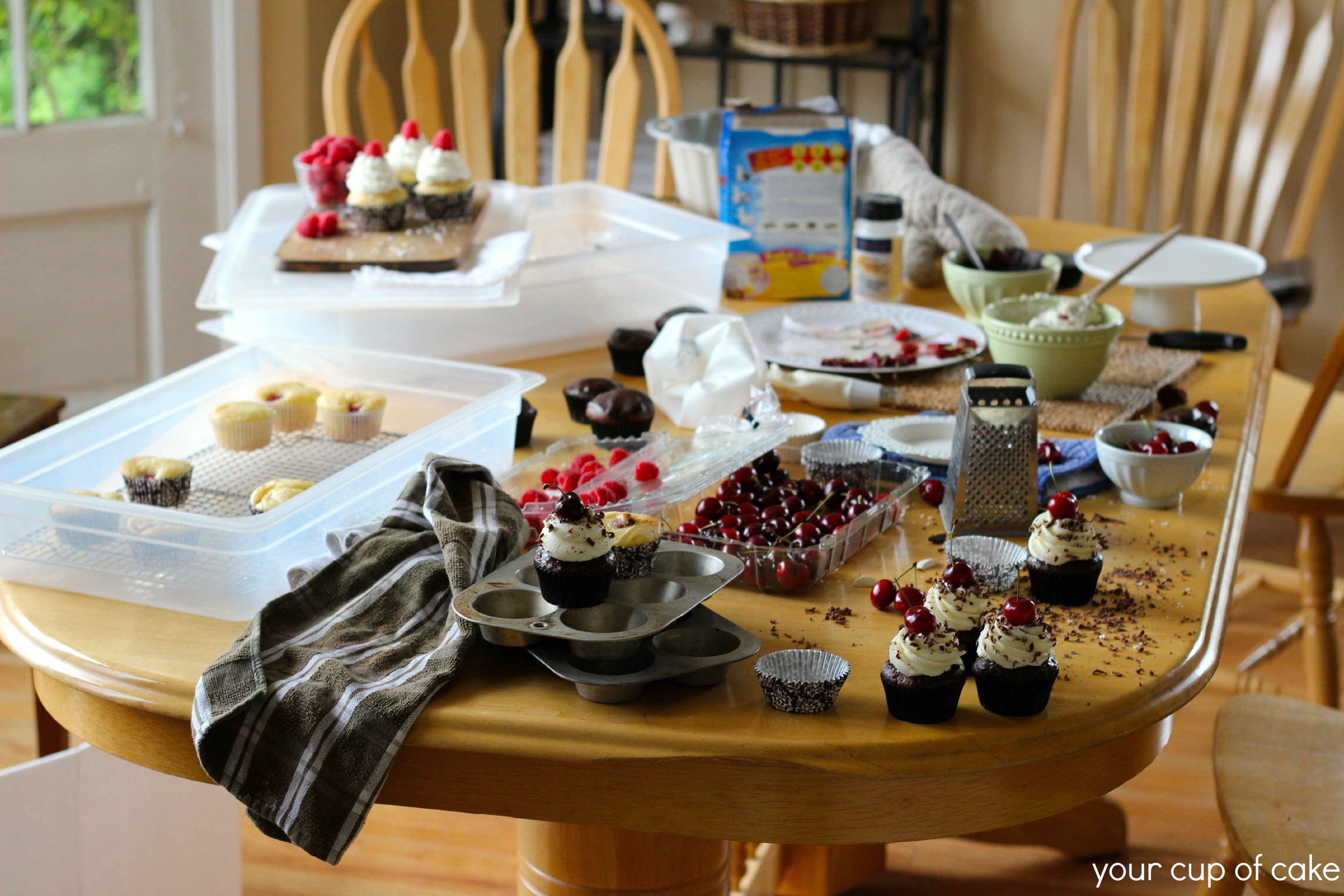
  • I'm pretty sure you don't want your work
    area to end up looking like this.
    • File old papers and tests. Don't throw away materials or past assessments unless your teacher says to; these materials may come in handy when you're preparing for mid-year or final exams.
    • Use accordion folders, separate binders, or a giant binder with dividers to keep old work organized by subject and topic. Put these in your storage space so they're not cluttering up your work space, but they're still available for reference when needed.
    • You could do this every day, at the end of every school week, or even on Sundays when you're preparing for another week at school. It doesn't really matter when; the important thing is that you do this at least 1-2 times per month, depending on how many papers you have in your binders or folders.  
  • Set aside time at the beginning of each work session to review your planner and to check (using the classroom websites, if possible), that you know what you have to accomplish that night.
    • Then, make a plan of approach: What will you start with? What will you do next? When, and for how long, will you take a break? Plan this out in writing, and stick to it.

Environment

  • Reduce and/or remove distractors in your work area.
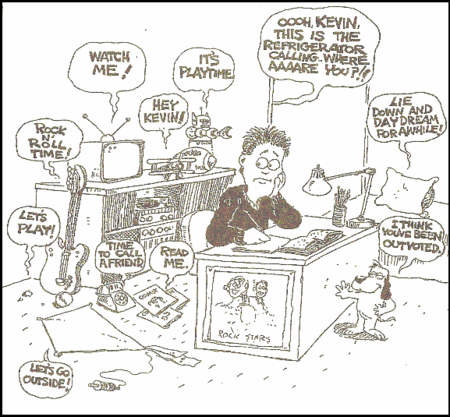
  • Look familiar? It does to me!
    • Put your phone in a different room
    • Keep the computer screen turned off unless you're using it for homework
    • Pull down the shades/ blinds if you're facing a window
    • Turn off the TV or music
  • Make sure you have adequate lighting, so your eyes don't have to work as hard.
  • Get some fresh air in the room if possible.


Good luck!


A Different Way to Take Notes


Visual Note-taking 
(aka Sketch Notes or Graphic Notes)


Bullet points, outlines, and summaries are not always the best way to take notes from assigned reading or from lectures and class discussions. The video below explains another method of note-taking called "sketch notes" that relies on the creation of visual images along with recording text, to record and reinforce essential information.


"Do things your way so everything makes more sense." In my opinion, this is one of the essential take-aways of that video. Everyone perceives things differently, and we all have unique learning styles.  If you find a method for taking notes that works well for you, and it is effective, then keep on using it! Most of us will have to try a bunch of different styles and strategies for note-taking before we find one that works. Many of us also have to use different styles of note-taking depending on the task or what we will be expected to use those notes for.

Below is a video I recorded when I was attempting to use this style of note-taking to keep track of events in a chapter from A Long Way from Chicago by Richard Peck. Please be gentle when judging my sketches.


Thanks for not being a critic, but I'll admit it- I don't think that went that very well. It was difficult to not just draw the scene I was reading about. However, that was one of my very first attempts at this style of note-taking. So, I'm going to try it again... after watching this video done by someone way more versed in this style of note-taking.


A few important things I took away from this instructional video were that you don't have to try to get all of the details down in  your notes in the moment; instead, you can go back to fill in details like additional text, color, and more precise drawings. Also, the video pointed out the importance of thinking about the layout or format of the notes, prior to beginning. I think that for the notes I took from A Long Way from Chicago, it would have made more sense to have a storyboard setup, where I have frames showing the different scenes and important events in the chapter. Maybe even reading the whole chapter first, then going back to sketch out the most important elements like the conflict, rising action, climax, and resolution, would have made more sense.

I'll have to keep working at this format of note-taking because I do think that it would work well for me in certain situations. I hope you will try this style of note-taking as well, in a few different situations, so you can see if it's something that may work for you!

Wednesday, September 30, 2015

Using your planner!!!

The key to effectively using a planner is consistency: use it well and use it always. If you only use your planner once in a while, or don't use it to write down homework in each and every class, it's probably not going to be helpful to you. But, if you do use it well and use it consistently, you will likely find that you are less stressed about schoolwork, you're getting better grades, and you're enjoying your classes more because you're prepared and more relaxed!


Backwards planning for long term projects, and upcoming tests and quizzes works like this:
1. Start by writing down when the assignment is due, or when the test/quiz is. Write this in on the day it's due/ being given.
2. Count back the days you have to work on it; that is, count backwards from the due date to today.
3. Think about the amount of material you have to produce, or review to prepare for the test or quiz. Divide it into chunks that make sense for whatever the assignment it. For example, if you have a math quiz on chapter 1, sections 1-3 four days from now, maybe you chunk down the material into sections (one per night), then use the fourth night to review all of the sections together. If you have a first draft of a five-paragraph essay due three days from now, maybe you work on brainstorming and outlining tonight, writing the three body paragraphs tomorrow, and then writing the intro and conclusion the next night.
4. Write down EXACTLY what you will work on each night, and how you will "work on" it. Writing "study" in your planner doesn't really remind you of what you should be DOING to study. Instead, write down "make flashcards and play mix-and-match game with flashcards" or "make and complete an active practice on section 1."

The idea behind backwards planning is to get larger assignments or tasks done by attacking it in smaller and more manageable pieces, in the days leading up to a due date or an assessment date. Practicing backwards planning can help you to see a large assignment as more manageable, and it can also help you to not procrastinate on the work! Above is a video that shows an example of backwards planning in practice.

Estimating the amount of time each nightly assignment will take, and writing down that estimation, can help in two ways: first, it can be a goal to then complete the assignment in that amount of time, which may lead you to be more efficient and focused; second, it can help you to get an idea of when you should work on each task. For example, if you think that reading a chapter for English will take you about 20 minutes, and writing a response for History will take you about 30 minutes, and you know that you have only 20 minutes left before having to eat dinner, you could complete English in that amount of time rather than feeling interrupted when working on history. Also, generally speaking, the longer something is going to take, the more brainpower it is going to require. So, it's often a good idea to complete longer assignments before working on shorter ones.

Plan out the order in which you'll complete your assignments, before beginning them. Simply numbering assignments or subjects 1, 2, 3, ... can help you to feel like you have a road map to your nightly homework. Again, for most people, it works best to start with the most difficult assignments first, because that's when they have the most brainpower or mental energy. However, other students report that starting with something they like, or something that's relatively easy, works well because they feel like it's motivating and it gets them on a roll with their work, and gives them confidence in their ability to complete the work (even when the later assignments are more difficult).